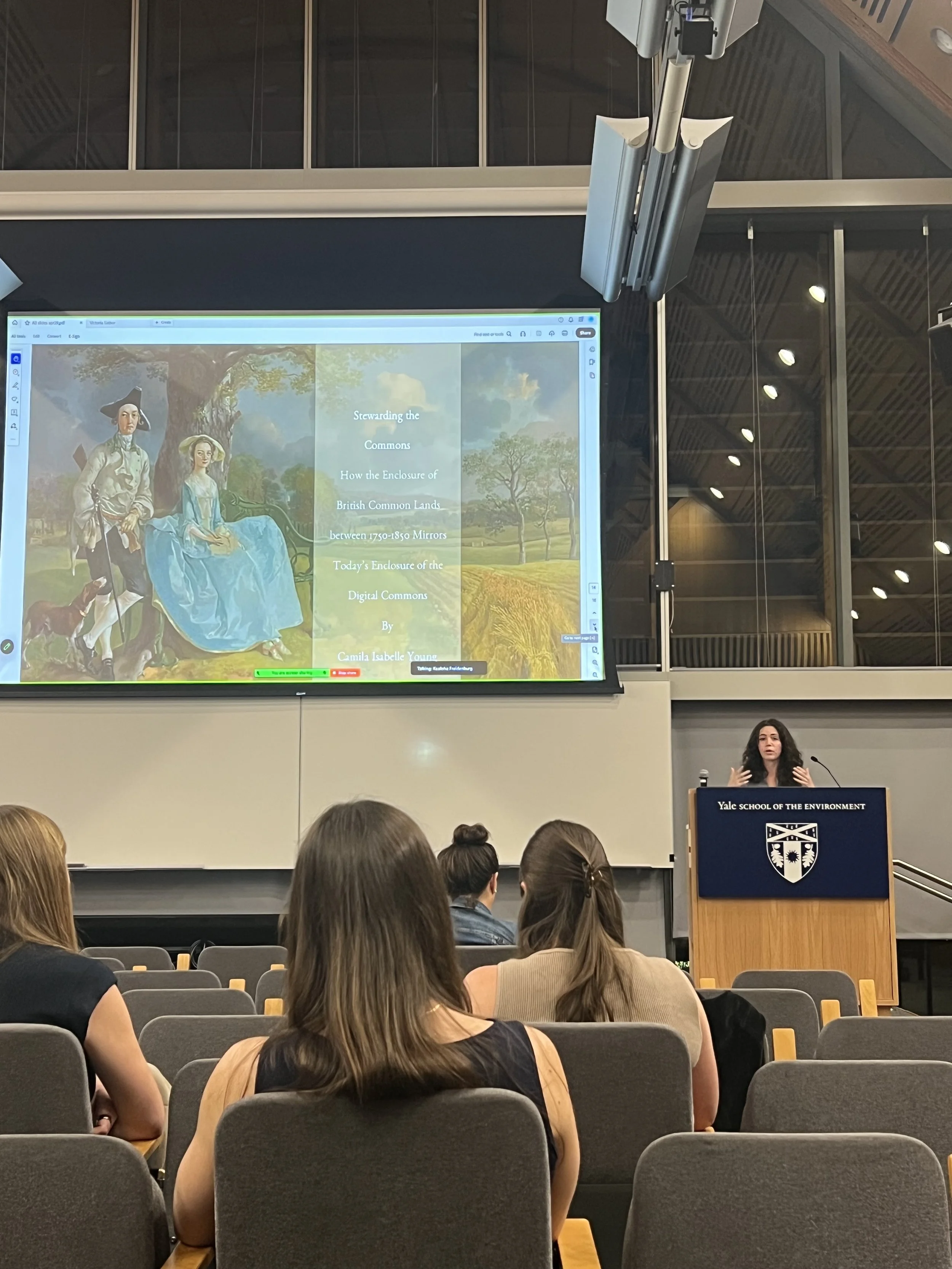
Stewarding the Commons: How the Enclosure of British Common Lands between 1750-1850 Mirrors Today’s Enclosure of the Digital Commons
ABSTRACT
Before the British Enclosure Acts (1750-1850), Britain had vast plots of common lands, places of communal cultivation. Parliament called for the fencing of these commons through the Enclosure Acts. Lands became an acquirable asset that could be used to reinforce the power and prestige of landowners. I analyze the aesthetics and persuasive narratives that solidified hierarchical methods of resource control and access and which made enclosure seem like an ‘advancement.’ These aesthetics dismissed the disastrous effects that enclosure had on commoners who lost their rights to land that had been customarily understood as communal. I make an analogy to today’s AI revolution, asserting that AI is acting as an enclosure of the digital commons. While the digital commons exists in the abstract realm, and land commons in the realm of the physical, there remain parallels to be drawn between land enclosure and digital enclosure in that they both are shared resources consolidated without regard to communal custom. I defend the possibility of a commons being stewarded by challenging aesthetics and arguments that moralize the domination of shared resources, with the goal of supporting a form of resource sharing that acknowledges mutual obligations and common access.
This thesis was undertaken with the support of the Yale School of the Environment and with the advice of Prof. Margret Spillane. It was defended publicly at the Yale School of the Environment.
If you’d like to discuss some of these ideas, or access the text, please email me.