The
Climate Renaissance
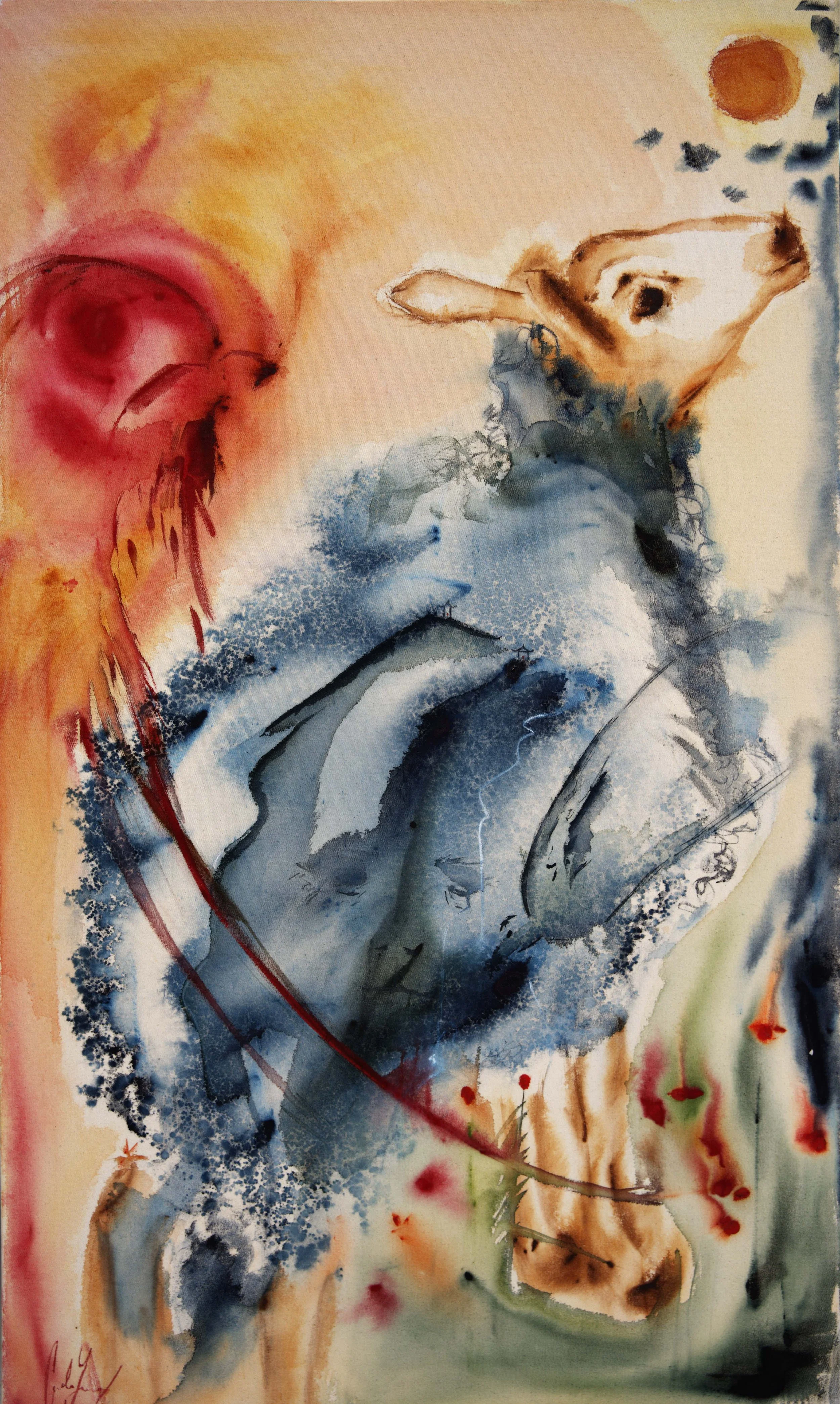
‘Symbolo’ is the root word of symbolism; in latin, it means to throw together.
A Trappist monk taught this to me, when I asked of the significance of symbolism. I wanted to learn how I could contribute to something greater than myself through the visual arts.
‘The Climate Renaissance’ is a symbol I use to describe the throwing together of disciplines to respond to natural and human injustice with beauty and service. The humanities, science, theology, and policy coming together.
This line of curiosity deepened through a fellowship I undertook with the Yale School of the Environment and Yale’s Jackson School of Global Affairs, in which, through walking and engaging in dialogues with religious pilgrims, I sought to explore how key features of the Renaissance (religion, science, governance, and art) can guide our thinking about nature and society. This led into an academic thesis and exhibition exploring how society might steward natural and technological resources for a communal good.
I seek to serve through my work. And to support a ‘Climate Renaissance’ philosophy of change.
So far, for me, this has meant leading artistic workshops that support conservation in nature reserves, hosting peaceful climate dialogues among lawyers and diplomats, collaborating with filmmakers to create a nature-conscious film, founding creative coalitions.
I’m learning how to become more comfortable with accepting not knowing. It’s hard. But one of the beauties of this recognition is a simplicity in action. All I can do is continue taking the next step.
I know I’m not alone in seeking to respond to today’s disillusionments with a creative reckoning. If you’d like to work together, please reach out.
This era’s Renaissance can’t happen alone. We can create it.
We walked away with a shared remembrance of histories of suffering and a sense of hope for the future.
*
We walked away with a shared remembrance of histories of suffering and a sense of hope for the future. *
Babel
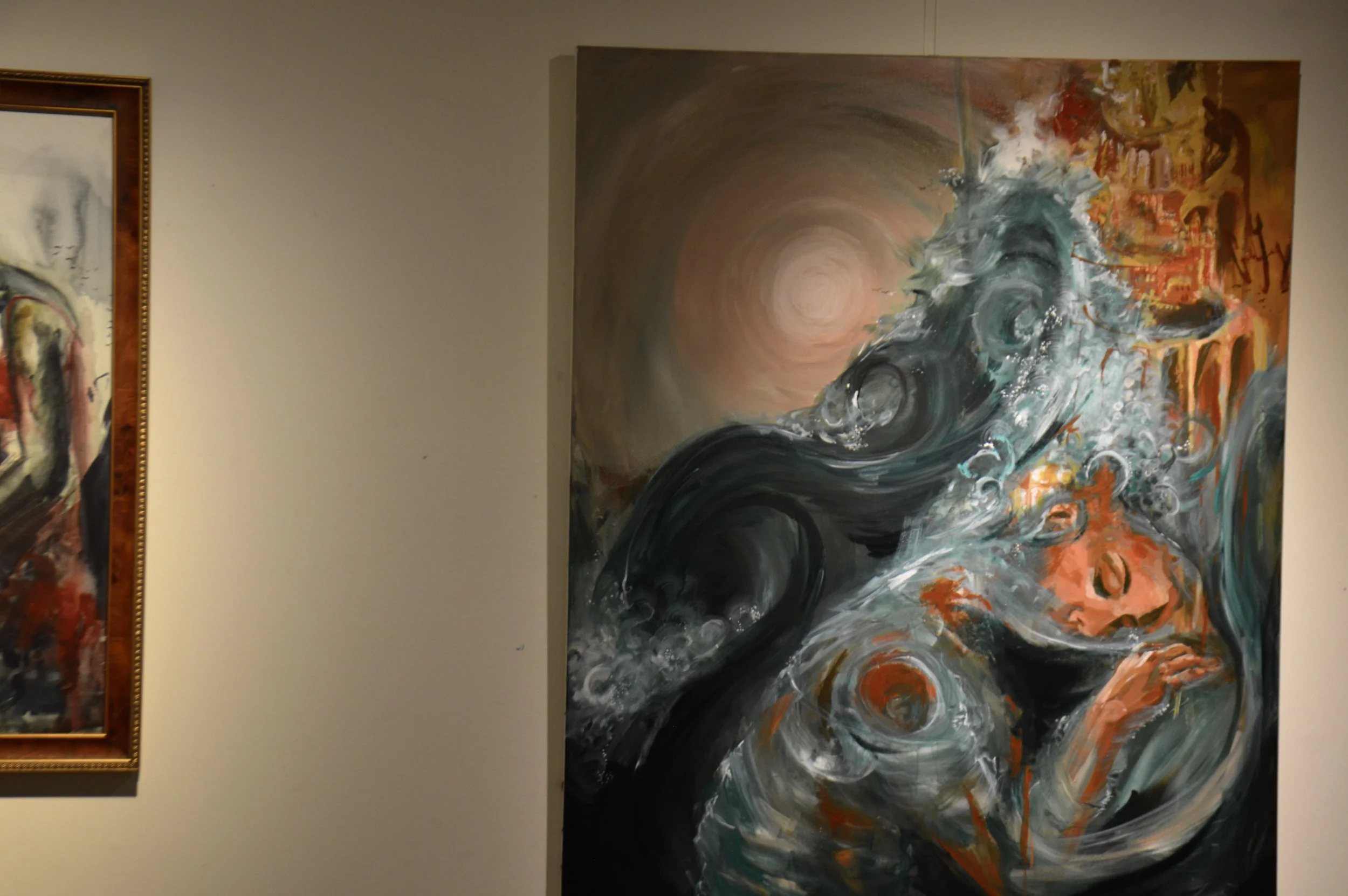
The story of this painting, Babel, is an example of the Climate Renaissance in motion.
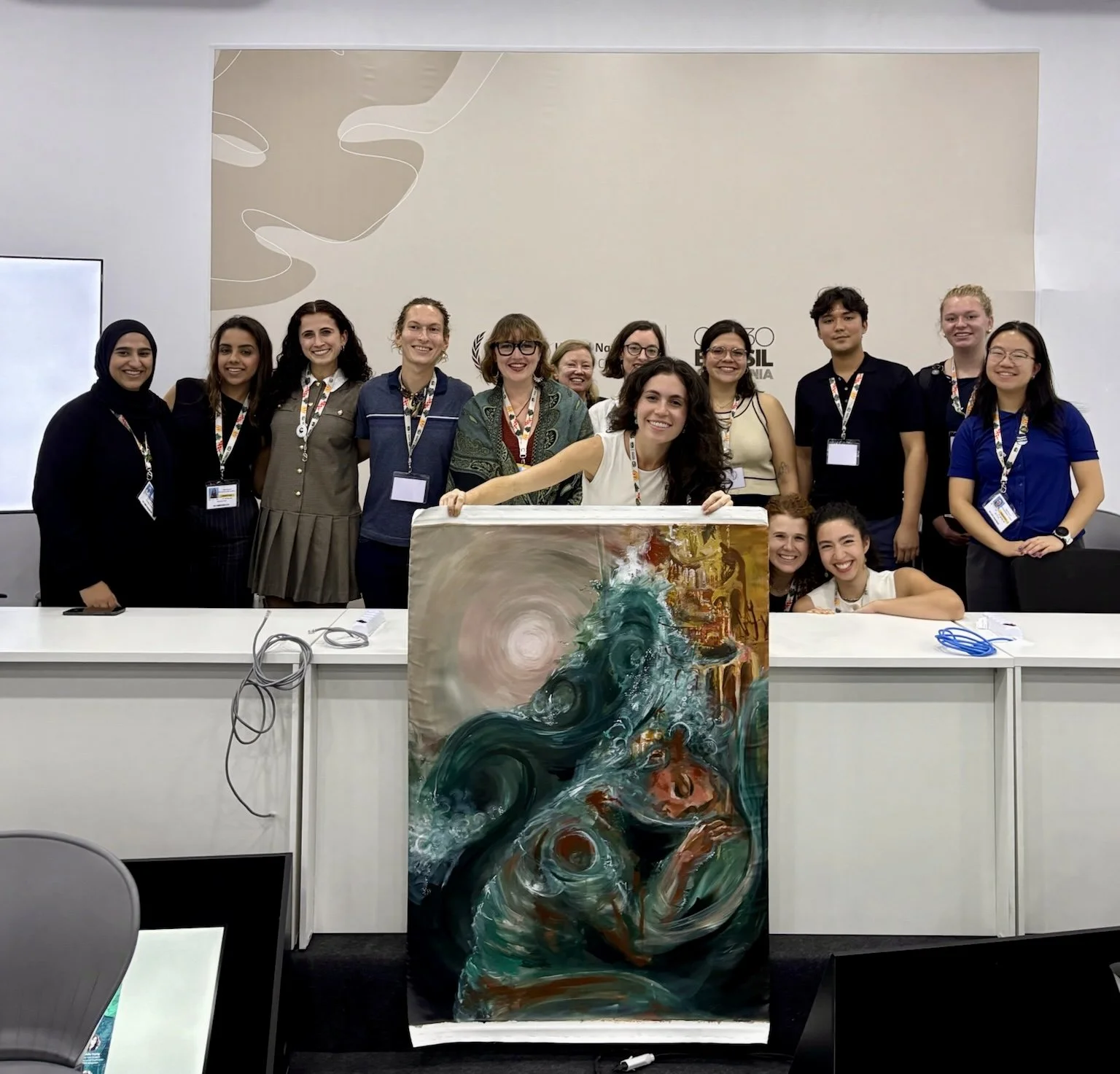
It was exhibited at the United Nations as part of a Talanoa-style diplomatic dialogue at COP30 of the United Nations Framework Convention on Climate Change, in which participants discussed international climate justice through the lens of artistry.
Organized by the Yale Student Environmental Coalition Delegation in collaboration with the Duke Delegation to COP30 of the UNFCCC, students, lawyers, researchers, diplomats, and artists united at a side event to discuss the consciousness needed to address climate migration. We contended with the cultural clashes driving a crisis — and imagined solutions grounded in love.
United Nations side events are typically conducted on a podium, with audience members physically looking upward toward the speakers. Talanoa, the method of discussion we chose, embodies the principle that all knowledge holders have equal value, disrupting conventional conference hierarchies that privilege certain voices. This style of discussion originates from the Pacific Islands and provides opportunities to share authentic knowledge grounded in Pacific values and principles of love, respect, humor, and warmth. We engaged in storytelling and genuine sharing, with pauses for collective reflection and open dialogue where anyone could contribute insights from their own experience.
We wanted to center affected communities as equal partners and consider solutions that are both evidence-based and community-centered. Circle participants were empowered to both ask questions and respond to those presented.
We began our discussion as an invitation to share stories of climate injustice related to climate-induced migration. I placed the Babel painting on the ground, in the center of our circle-style dialogue, and shared my own family's story alongside the significance of the visual symbolism.
The woman in the painting is bowing in humility as the city of hubris topples under the strength of waves. Humility is the foundation upon which we could build again.
We transitioned into a discussion of solutions — how could international law work in tandem with art to protect and culturally defend the human dignity of climate-displaced refugees?
The city climbs into its hubris.
Its inhabitants, drunk on the views, reveling in their creation.
They recline in the coolness of their towers, giddy to keep the heat outside.
They confuse the beating sun as attribution to their glory, for they know how to manage.
They speak of domination.
Absorbed in themselves, their tongues lick inwards.
Language is no longer an act of connection, but a grasp for control.
Speak to hear themselves, to savor the melody of genius.
They develop an interior tongue.
Intentions trapped in their skulls, circling, crashing, collapsing.
They look at their neighbor: a point of comparison, a subject of conquest.
They forget what it is like to speak for the sake of connection.
Caged in their flesh.
She foretells the oncoming storms.
She whistles in the winds as they become stronger,
and she nudges with the swells that turn acidic.
But their ears are turned inward,
listening to their internal tongues.
She bows to their deafness,
taking to her mantle of sacrifice.
They see her submission and choose to build upon her.
Vanity compels them to ravage her.
And when the waves come,
when the city topples,
their cries fall on turned ears.
And She?
She maintains her genuflection,
ready to give them her body for when they build again.
Waters fall over her lips,
but it doesn't matter,
since she chose silence long ago.